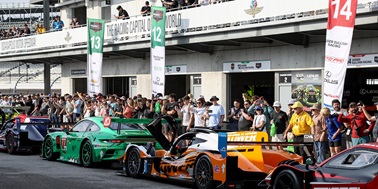
Sports car racing makes its annual return to Indianapolis Motor Speedway for the TireRack.com Battle on the Bricks on Sept. 18-20, with the unique, “race within a race” format of class racing in the IMSA WeatherTech SportsCar Championship and Michelin Pilot Challenge series.
Just one type of race car competes either on the 2.5-mile oval or the 14-turn, 2.439-mile road course at the Racing Capital of the World during NTT INDYCAR SERIES, INDY NXT by Firestone, NASCAR Cup Series and NASCAR Xfinity Series competition. The length of those series’ races also is measured by laps, and there is just one driver assigned per car.
SEE: WeatherTech Championship Entry List | Michelin Pilot Challenge Entry List
Sports car racing is different and unique.
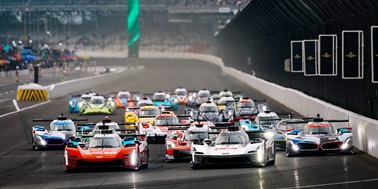
Four separate classes of cars will race simultaneously when the featured WeatherTech SportsCar Championship race starts at 3:10 p.m. ET Sunday on the 14-turn, 2.439-mile road course. And the race is not measured by laps; it’s measured by time – a two-hour, 40-minute sprint race.
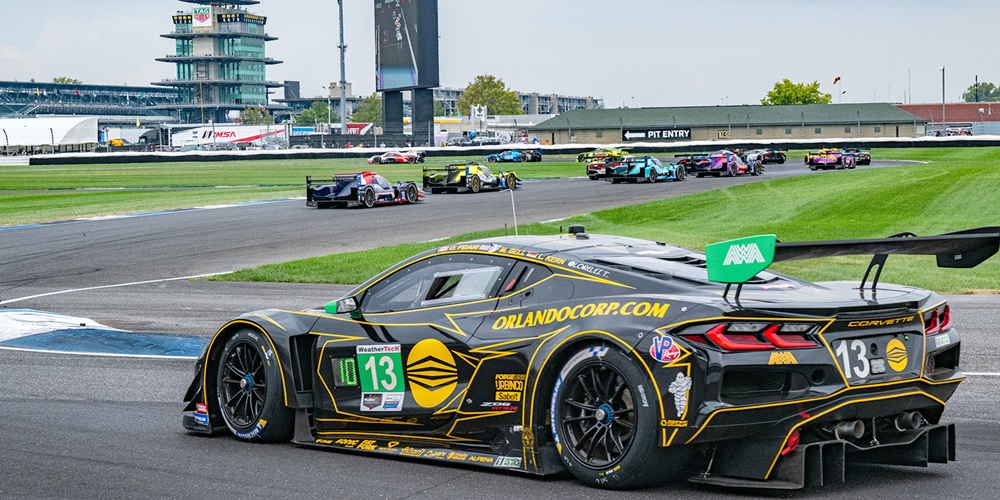
Drivers from all over the world compete for overall victory but also for first place within their respective class. That unique format always keeps the racing interesting, and the varying speeds of the four classes of machines create intense racing within classes and plenty of traffic for the fastest classes to navigate for most of the race.
The four classes of cars in the series are comprised of two styles of cars – prototype, which showcases the latest automotive technology and are designed uniquely for the racetrack; and GT, based on road-going production models.
Teams also perform driver changes during selected pit stops, as drivers rotate in and out of the cars over the race.
So, let’s take a look at the four classes of the IMSA WeatherTech SportsCar Championship:
Grand Touring Prototype (GTP): The newest and most technologically advanced Prototype race car took to the track for the first time in 2023 with most entries featuring a common hybrid powertrain that takes kinetic energy gained in braking and stores it in batteries for later use when needed. Five global automotive manufacturers – Acura, Aston Martin (non-hybrid), BMW, Cadillac and Porsche – are entered in the class. Each manufacturer developed its own unique internal combustion engine and bodywork styling to take on this cutting-edge challenge.
Le Mans Prototype 2 (LMP2): The Le Mans Prototype 2 (LMP2) is a closed-cockpit car developed by four approved constructors. In addition to the IMSA WeatherTech SportsCar Championship, LMP2 cars are eligible to compete in other global series such as the FIA World Endurance Championship, which includes the prestigious 24 Hours of Le Mans.
GT Daytona Pro (GTD PRO): GTD PRO, which debuted in 2022, includes race cars built to FIA GT3 technical regulations and offers the opportunity for factory teams and driver lineups to compete in the class. Manufacturers competing in this class in 2026 include Aston Martin, BMW, Chevrolet, Ferrari, Ford, Lamborghini, Lexus, Mercedes-AMG and Porsche.
GT Daytona (GTD): The GT Daytona cars are enhanced (not defined by) technology and use the global FIA GT3 specification. The GTD class consists of cars from leading manufacturers such as Aston Martin, BMW, Chevrolet, Ferrari, Lamborghini, Lexus, Mercedes-AMG and Porsche.
The Michelin Pilot Challenge also is racing this weekend at IMS in the Indianapolis Motor Speedway 120, a two-hour race starting at 2:30 p.m. ET Saturday. That series also features a “race within a race,” but with just two classes of production-based sports cars and touring cars.
A look at the two classes:
Grand Sport (GS): The Grand Sport class consists for SRO GT4-homologated cars with engines tuned to produce between 400 and 450 horsepower and can run speeds in excess of 160 mph. Competition is equalized by adjustments to fuel-tank capacities, ride height, power and weight. Manufacturers competing in 2026 include Aston Martin, BMW, Ford, McLaren, Mercedes-AMG, Porsche and Toyota.
Touring Car (TCR): The Touring Car class consists of WSC TCR-homologated cars with engines tuned to produce between 300 and 350 horsepower and can run speeds in excess of 140 mph. Competition is equalized by adjustments to fuel-tank capacities, ride height, power and weight. Manufacturers competing in 2026 include Audi, Cupra, Honda and Hyundai.