
History
Indianapolis Motor Speedway
Icons of the Indianapolis Motor Speedway
Wilbur Shaw
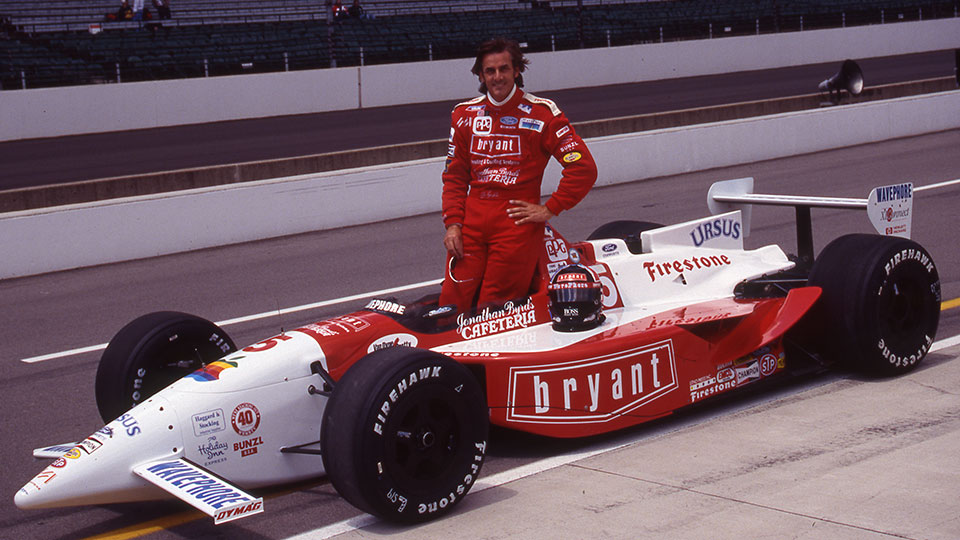
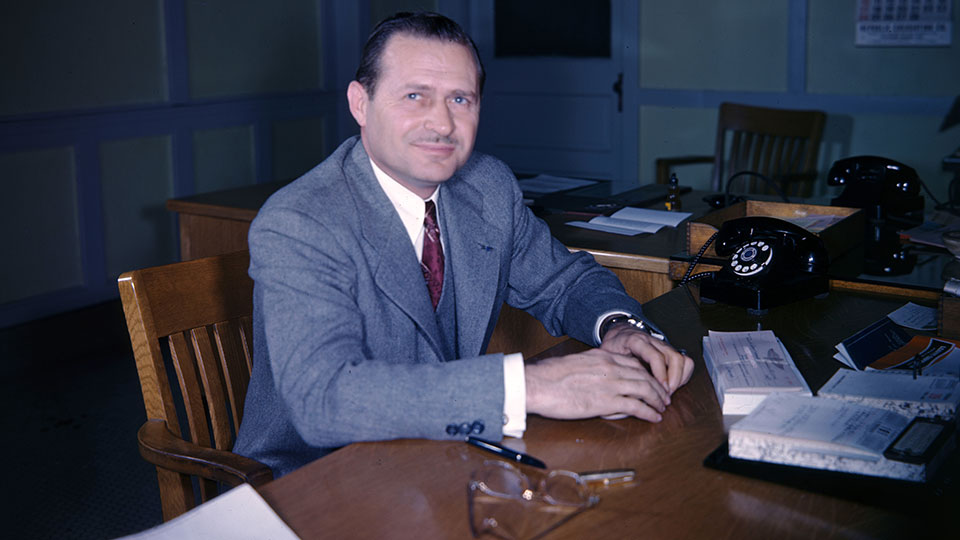
Wilbur Shaw isn’t just one of the most decorated race car drivers in Indianapolis 500 history. He’s arguably the reason the race still exists today. Shaw dominated the late 30’s and early 40s at Indianapolis, scoring three wins and becoming the first back-to-back winner. But during World War II, Shaw was heading up Firestone Tire and Rubber Company’s new aircraft division while the track laid dormant for four years due to the War. Shaw paid IMS a visit in 1944 for rubber testing for Firestone, and he found the Speedway to be in a state of disrepair. He had also heard from the locals that it was generally believed that as soon as the War was over, the track would probably be sold to developers and subdivided in anticipation for the post-war housing boom. Shaw wouldn’t have it, and he went on a mission to find a buyer to revitalize the Speedway. Eventually, he found Terre Haute, Indiana, businessman Tony Hulman. Hulman purchased the Speedway, named Shaw track president, and together they brought the Indy 500 back in 1946. Shaw served as president of IMS until his untimely death in 1954.
Tom Carnegie
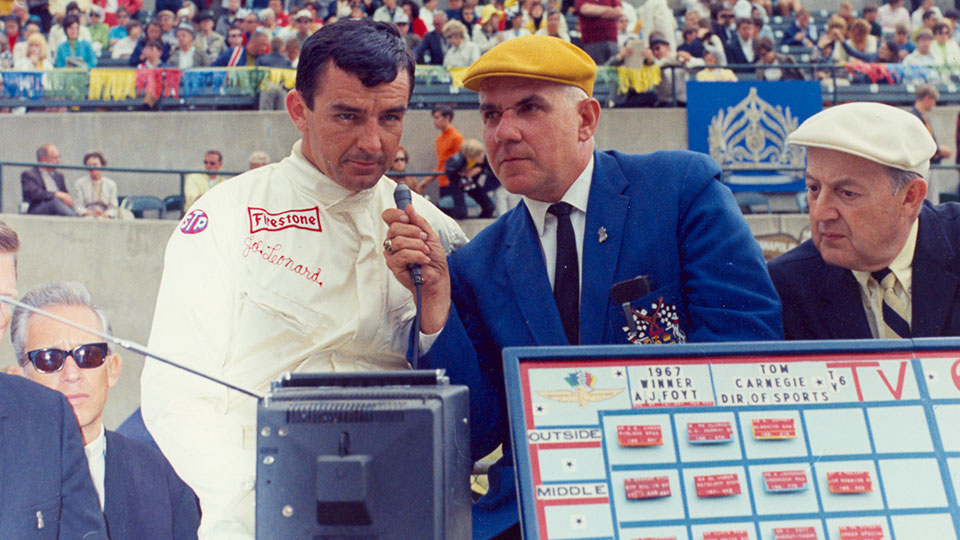
Maybe just as beloved as the drivers, or even in some cases more beloved, was longtime public address announcer Tom Carnegie. Carnegie was iconic in his own right, having first been heard on the Public Address system at IMS on Race Day in 1940. By the mid-1950s, his booming baritone voice was one of the track’s most recognizable and cherished attributes, coining phrases still used today such as “AND HEEEE’S ON IT!!” and “IT’S A NEW. TRACK. RECORD.” and so many more. Carnegie dreamed of being an actor, but those dreams were effectively dashed during his college days when he was stricken with polio. Instead, he regrouped and began focusing on using his extraordinarily rich voice for commentating at sporting events, with his sense for the dramatic paying dividends for him.
Sid Collins
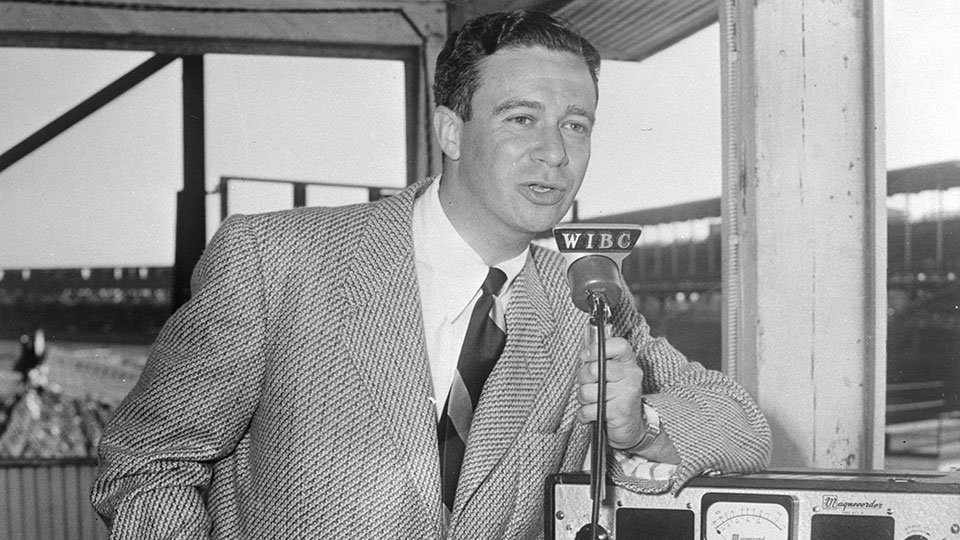
Radio broadcasts emanating from the Indianapolis 500 date all the way back to the early 1920s. In early May 1952, Shaw and Hulman announced the formation of the Indianapolis Motor Speedway Radio Network. Sid Collins began anchoring the radio broadcasts in 1950, and he quickly became known as the Voice of the 500. A quartet of half-hour qualification wrap-up shows were added to the broadcast schedule in 1954. Those who listened heard another tradition in the making. A number of station managers had been asking if some sort of standard “out cue” could be used to warn their engineers of an approaching commercial break, and when Alice Greene, a 21-year-old WIBC copywriter suggested to Collins, “Stay tuned to the greatest spectacle in racing,” another “500” tradition was born.
Janet Guthrie
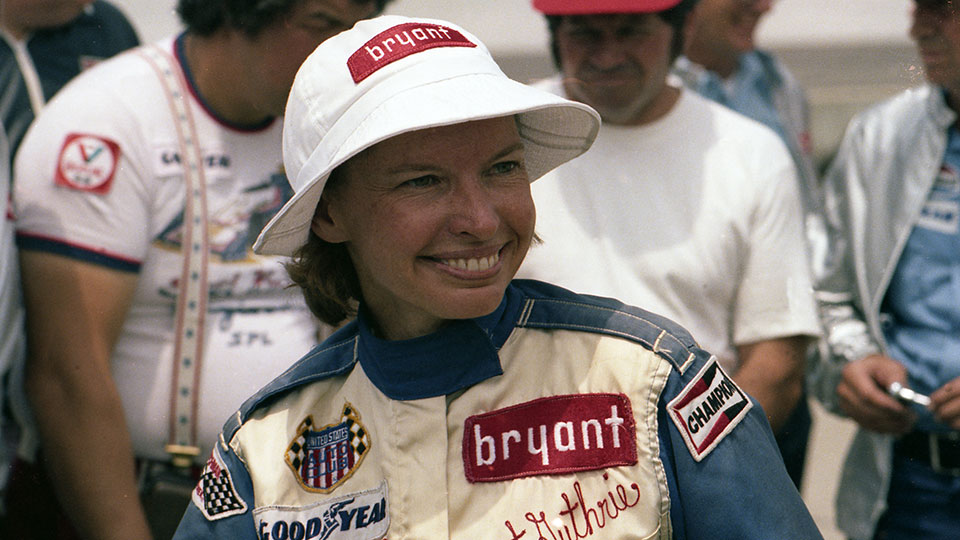
Janet Guthrie was born in Iowa with a passion for aviation. She earned her pilot’s license at age 17 and completed long-distance flights, such as from Chicago to Miami, as a teenager. She earned a physics degree from University of Michigan in 1960 and applied to be a NASA astronaut. Unfortunately for her, she wasn’t accepted, but fortunately for motorsports, she turned her attention to racing. On May 22, 1976, she set an unofficial world closed-course speed record for women by turning a lap of 173.611 mph in practice. In 1977, she became the first woman to qualify for the Indianapolis 500. She qualified 26th and finished 29th.
Willy T. Ribbs
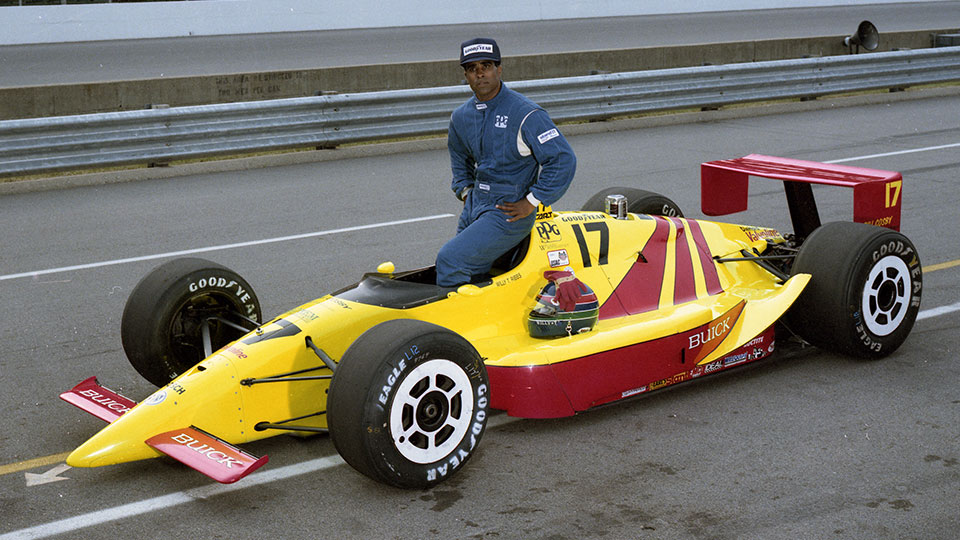
Willy T. Ribbs became the first Black man ever to drive official laps around the legendary Speedway in 1985 when he attempted Rookie Orientation Program. However, it would take a few years for him to attempt to qualify for the race. In 1991, engine troubles on the final day of qualifying jeopardized his chances of making the race. However, Ribbs’ team miraculously repaired the engine in time to make a qualifying attempt. With 45 minutes left in qualifying, Ribbs put together a four-lap average speed of 217.358 mph, good enough for 29th in the field. More importantly, he became the first Black driver to qualify for the Indianapolis 500.
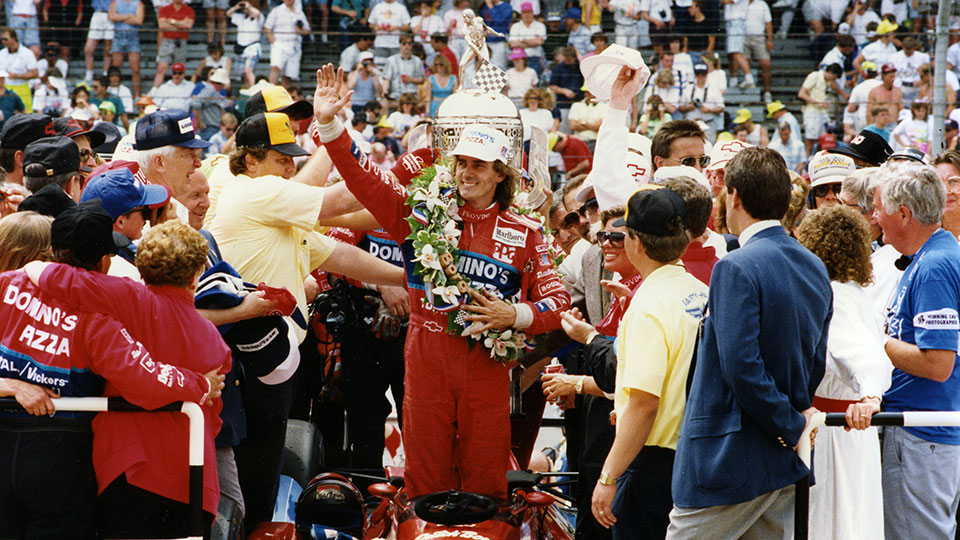
Arie Luyendyk
Quite literally, there’s nobody in Indianapolis 500 history faster than Arie Luyendyk. A two-time winner of "The Greatest Spectacle in Racing" in his own right, Luyendyk won the race in 1990 and 1997. In 1996, Luyendyk put down a blistering single-lap speed of 237.498 mph and a four-lap average speed of 236.986 mph in a qualifying run he said was relatively easy. Even in practice that year, he edged near the 240 mph mark. Through all of his success and race wins, it’s arguably his historic qualifying run, which still holds the fastest one- and four-lap speed records to this day, that he is most known for.
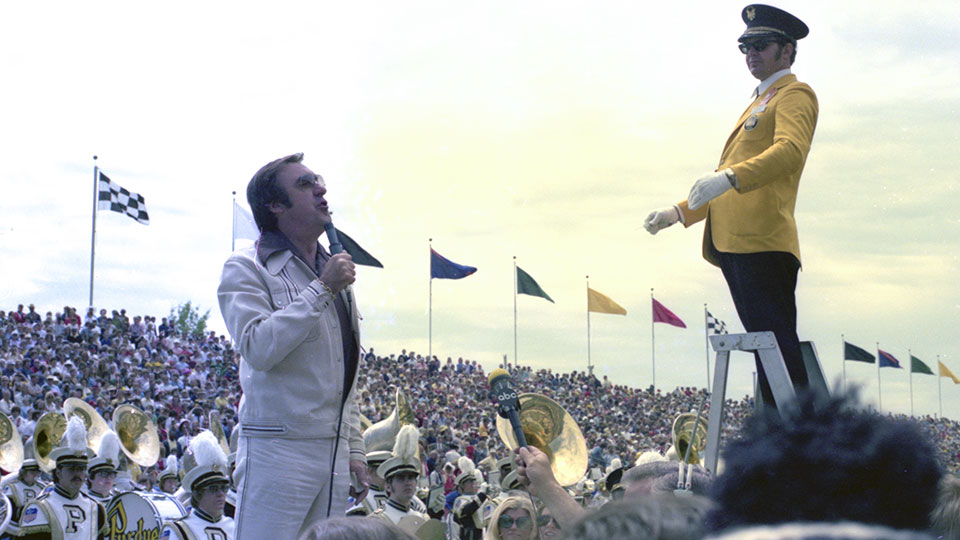
Jim Nabors
The pre-race ceremonies for the Indianapolis 500 today are meticulously scripted. From the 6 a.m. cannon through "Drivers, Start Your Engines," everything is the result of a plan that was months in the making. No vehicle is on the racetrack that should not be, and certainly no one unexpected is in front of a microphone.
So, one can hardly imagine the scenario in 1972 when IMS owner Tony Hulman went into the grandstands on race morning to ask a celebrity if, by chance, he would like to sing a quick song for the hundreds of thousands in attendance.
That's hard enough to believe. What's harder to believe is how that man became as much a part of the fabric of the Indianapolis 500 as fast cars and Foyt. Jim Nabors was an accidental legend who became synonymous with “The Greatest Spectacle in Racing,” singing Back Home Again in Indiana” 36 times from 1972 to 2014.
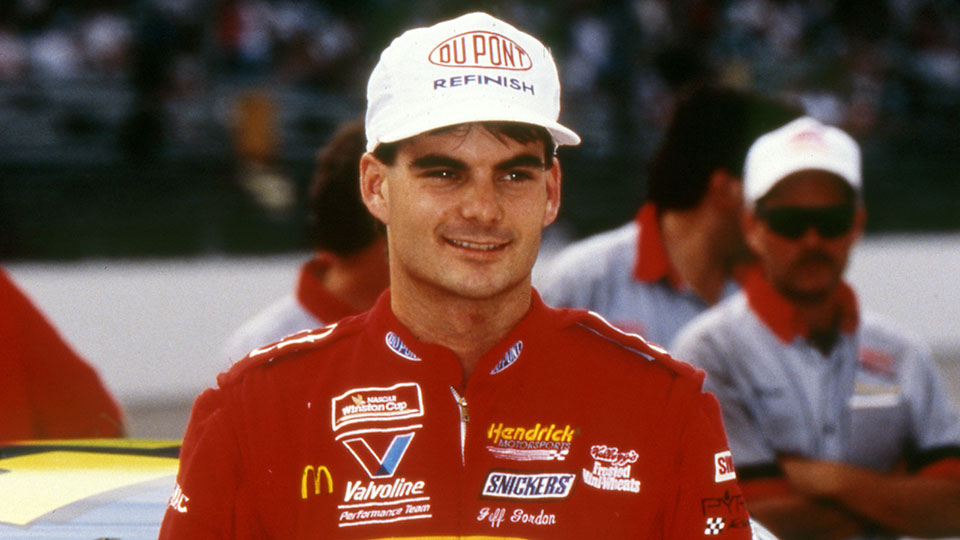
Jeff Gordon
When discussing the history of NASCAR at IMS, it is nearly impossible not to consider NASCAR Hall of Fame driver Jeff Gordon, who grew up in nearby Pittsboro, as the leader in every moment, statistic or category.
The five-time Brickyard 400 winner is arguably the best stock car driver ever at the Racing Capital of the World, having won the inaugural Brickyard 400 in 1994 and his last in 2014. Along with his wins (the others in 1998, 2001 and 2004), Gordon has three poles, led 528 laps, scored 12 top fives and 17 top 10s with an average finish of 10th in 23 starts.
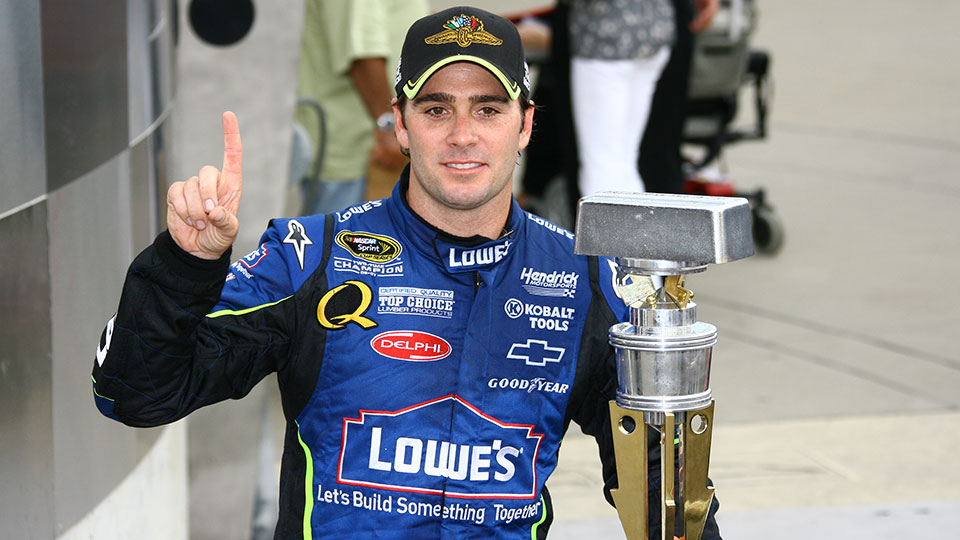
Jimmie Johnson
There’s another four-time winner at Indianapolis Motor Speedway, and his name is Jimmie Johnson. The decorated NASCAR champion, who is tied with Richard Petty and Dale Earnhardt for the most championships ever with seven, wreaked havoc on the Racing Capital of the World in the mid-to-late 2000s and early 2010s.
Johnson, with significant damage to his car, rallied from a blown tire in 2006 to win his first Brickyard 400. Then, he became the first driver to win the NASCAR major in back-to-back years in 2008 and 2009. He tallied a then record tying fourth win in 2012 to put him even with Jeff Gordon for two years.
Following his famed NASCAR career, Johnson transitioned to the NTT INDYCAR SERIES, where he competed in the 2022 Indianapolis 500. He started 12th in that race and finished 28th following a late-race crash.
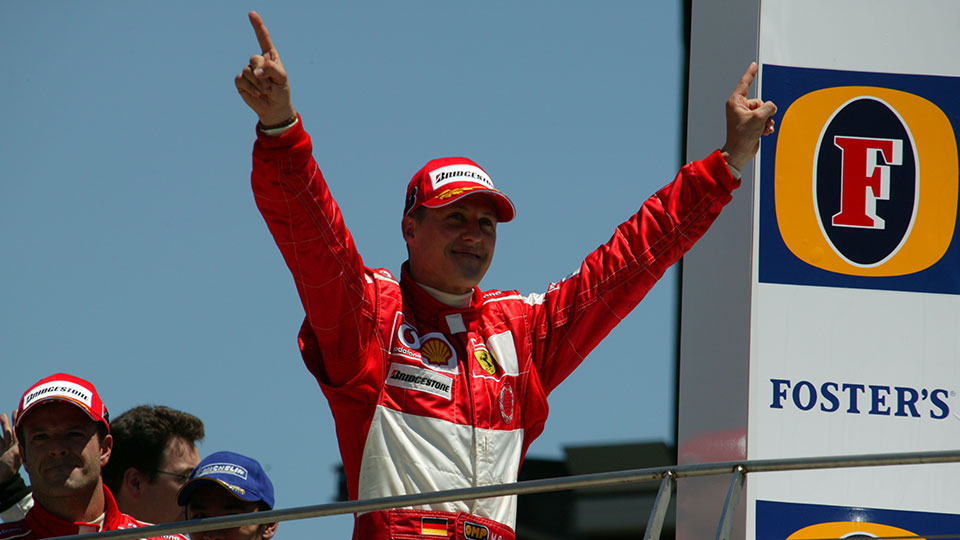
Michael Schumacher
The story of Formula 1 on the Indianapolis Motor Speedway road course cannot be told without the mention of F1 great Michael Shumacher.
Formula 1 arrived at the Racing Capital of the World in 2000, competing on a road course built specifically for F1. Shumacher won the inaugural race on Sept. 24. Then, he followed it up with four consecutive wins from 2003-2006, becoming the first to score five wins at IMS, bringing his dominating tour stateside and adding his name to the list of history-makers at the Speedway.